
A cybersecurity startup raised over $100 million, reached nearly $30 million in revenue, and was sold for $1 after a cash flow crisis.
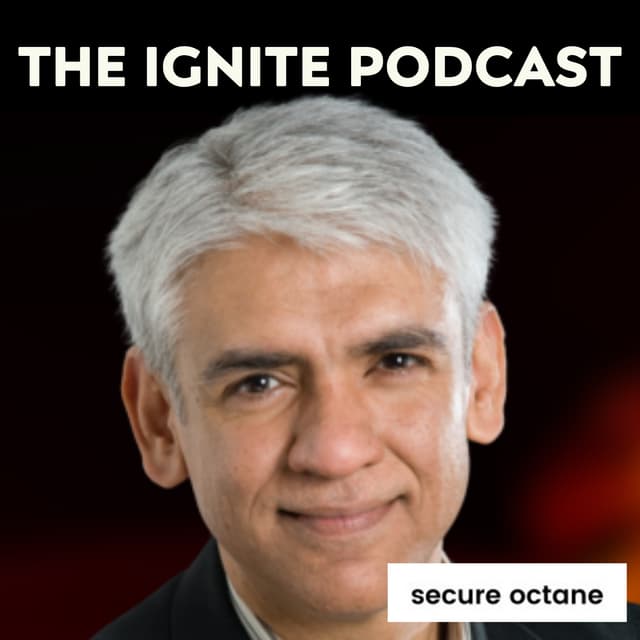
Mahendra Ramsinghani, founder and managing partner of Secure Octane, joins Brian Bell on the Ignite Podcast to examine the uncomfortable realities of venture capital. He leads a San Francisco seed fund focused on AI and cybersecurity, with exits involving Palo Alto Networks and Microsoft, wrote The Business of Venture Capital (now in its fourth edition), and teaches venture capital at UC Berkeley.
Mahendra argues that venture capitalists dramatically overstate their ability to predict winners. Behind polished theses and LP presentations, luck, timing, relationships, and access often decide outcomes. His own record includes a 16x return on a $50,000 Demisto investment, an 8x return that began with a chance encounter at the RSA Conference, and a cybersecurity company that collapsed despite raising substantial capital.
The conversation challenges several assumptions. Why do managers insist on concentrated portfolios when outcomes follow power-law distributions? Are megafunds keeping companies private too long? And why do institutional LPs sometimes prioritize protecting their careers over backing emerging managers?
In Today’s Episode We Discuss
00:01 Introduction to Mahendra Ramsinghani and Secure Octane
00:50 Growing Up in India and Entering Venture Capital
03:01 Why Venture Capital Is a Slow Path to Wealth
05:36 From NVIDIA Employee to Raising a $20 Million Fund
06:42 How a Cold Email Led to a Friendship With Brad Feld
08:31 Building Secure Octane’s Cybersecurity Investment Thesis
10:39 The Chance Encounter That Produced an 8x Investment
12:12 How Demisto Generated a 16x Return
14:27 Why Venture Capitalists Avoid Discussing Failure
16:11 The $100 Million Startup That Sold for $1
19:37 How Venture Capital Has Changed Over the Decades
21:03 Why Megafunds Keep Companies Private Longer
28:04 The Psychology of Venture Capital and Open-Heartedness
30:43 The Art of Saying No to Founders
35:17 What Separates Professional VCs From Angel Investors
38:15 Does Geography Still Matter in Venture Capital?
40:00 When Does an Emerging Manager Become Established?
41:25 Institutional LPs and Solo GP Succession Risk
54:12 Why Institutional LPs Avoid Career Risk
59:13 Challenging Traditional Portfolio Diversification
01:01:42 The Myth of Venture Capitalists Picking Unicorns
01:06:25 The Resilient Founder and Mental Health in Startups
01:09:19 How Investors Can Support Struggling Founders
01:11:57 AI’s Impact on Venture Capital and Entrepreneurship
01:15:40 Access to Y Combinator and Competitive Deal Flow
01:19:05 Ethics, Management Fees, and Long-Term Relationships
01:21:57 Closing Thoughts and Where to Find Mahendra
Mahendra also shares how a cold email to Brad Feld became a lasting friendship and book collaboration, how a single cash flow disruption destroyed a heavily funded company, and a practical approach to rejecting founders respectfully.
Ultimately, venture capital remains an exercise in judgment under uncertainty, where humility matters as much as conviction.
Pull Quotes
“Nobody knows. Nobody knows.”
“you have to be invisible but present and it’s very hard, you know.”
Follow Mahendra Ramsinghani on LinkedIn: LinkedIn
Follow Mahendra Ramsinghani on Twitter: X
Visit Our Website: Website
🎧 Watch, listen, and follow on your favorite platform: Website
Pre-order my book LP: The Insider’s Guide to Investing in Venture Capital Funds (Link)